Product packaging design is not merely an aesthetic element; it is a strategic tool that directly influences purchasing decisions, embodies brand identity, and performs practical and logistical functions. Below is a structured overview of the key principles a designer should follow when creating product packaging:
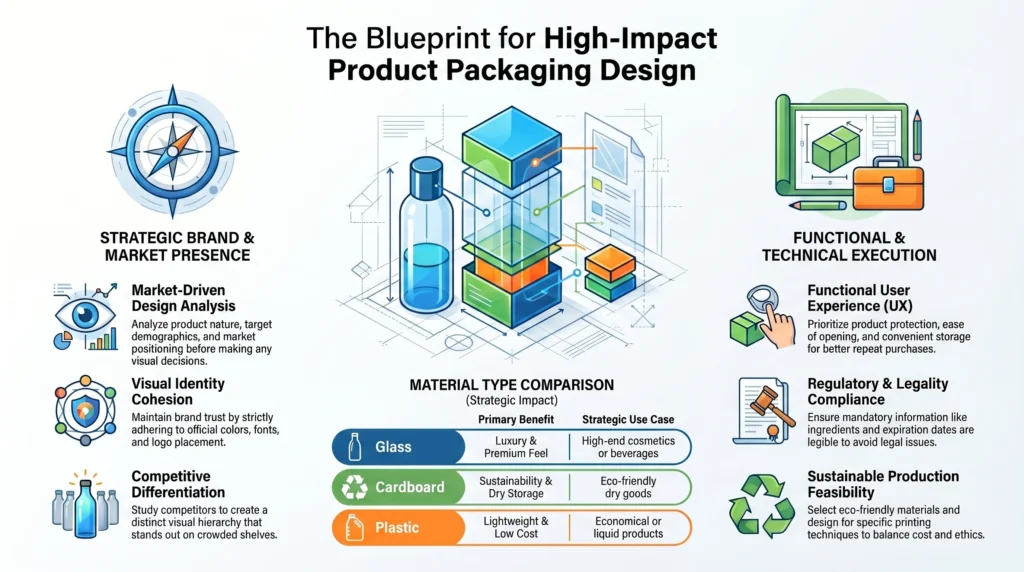
1) Understanding the Product and Market
Before making any visual decisions, the following must be analyzed:
- Nature of the product (food, cosmetic, industrial…)
- Physical characteristics (liquid, solid, fragile…)
- Target audience (age, culture, purchasing power)
- Market positioning (premium, economy, mid-range)
This understanding determines the level of complexity, material selection, and overall design tone.
2) Clear Brand Identity
Packaging is the face of the brand; therefore, it must:
- Adhere to official colors and typography
- Present the logo clearly and in balance
- Maintain consistency across all products
Any inconsistency weakens brand recognition and trust.
3) Visual Appeal
In a competitive environment (store shelves or ads), the packaging must:
- Stand out quickly (contrast, distinctive colors)
- Be visually balanced (clear hierarchy)
- Use high-quality visuals or elements
Appeal is not about complexity, but clarity and distinction.
4) Clarity and Legibility
Key information should be understood within seconds:
- Product name
- Type or flavor
- Quantity
- Key benefit
- Font size
- Text/background contrast
- Information hierarchy
5) Differentiation
Competitors should be analyzed visually:
- What colors and shapes do they use?
- How is information presented?
Then provide:
- A new concept or unique treatment
- A distinctive visual element (structure or design style)
6) Production Feasibility
Not every design is practically executable. A professional designer works alongside manufacturing constraints:
- Printing techniques (Offset, Flexo…)
- Number of colors and cost considerations
- Cutting and folding limitations
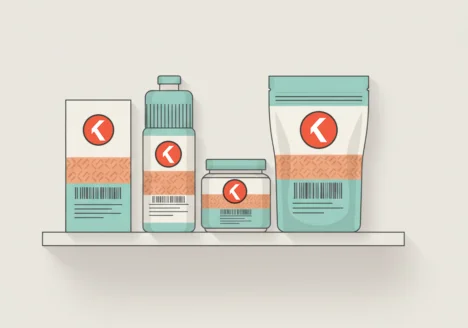
7) Product Line Consistency
To ensure easy recognition within a product family:
- Maintain a unified design system
- Differentiate through colors or secondary elements when needed
Conclusion
Successful packaging design lies at the intersection of:
- Aesthetics
- Function
- Strategy
Any imbalance among these dimensions directly impacts market performance. An effective designer does not start with form, but with a deep understanding of the product and context, translating that into a practical, visually compelling, and commercially effective solution.