
If you own a small business or run a home-based business, you may think that large companies will always have the advantage because they have bigger budgets, larger teams, and more advertising.
But that’s not always true.
Many customers don’t choose a business because it’s the biggest. They choose the one that looks professional, treats them well, and offers real value.
Here are 10 simple tips that can help your small business stand out and compete.
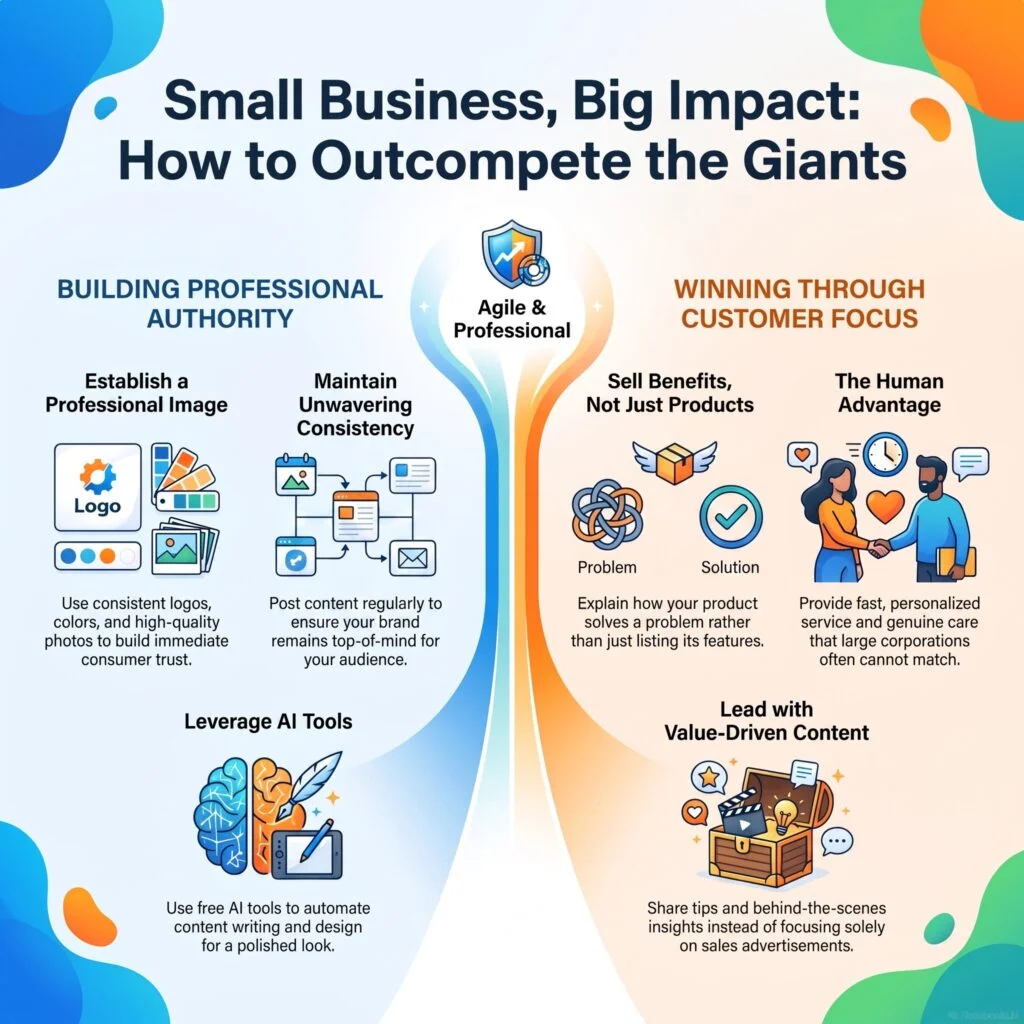
1. Make Your Business Look Professional
Even if you work from home, your business should look trustworthy.
Start with the basics:
- Use a professional logo.
- Choose consistent colors.
- Share clear, high-quality photos.
- Keep your social media pages organized.
A professional appearance creates a strong first impression.
2. Know Who Your Customers Are
You don’t need to sell to everyone.
Instead, ask yourself:
- Who needs my product or service?
- What problem can I solve for them?
The better you understand your customers, the easier it becomes to reach them.
3. Sell the Benefit, Not Just the Product
Customers care more about the result than the product itself.
Instead of saying:
“We sell handmade candles.”
Say:
“Handmade candles that create a warm and relaxing atmosphere in your home.”
Show people how your product or service improves their lives.
4. Stay Active
Don’t post once and disappear for weeks.
Share something regularly—even a few posts each week can make a difference.
The more people see your business, the more likely they are to remember it.
5. Share Helpful Content
Not every post should be an advertisement.
You can share:
- Useful tips.
- Product demonstrations.
- Customer reviews.
- Behind-the-scenes moments.
- Answers to common questions.
Helpful content builds trust before it generates sales.
6. Take Care of Your Customers
Good customer service is one of the biggest advantages a small business can have.
Always try to:
- Reply quickly.
- Be polite.
- Keep your promises.
- Solve problems professionally.
Happy customers often become repeat customers.
7. Use AI to Save Time
Today, even small businesses can use AI tools to:
- Write social media posts.
- Create images.
- Edit videos.
- Generate ideas.
- Respond to customer inquiries.
These tools help you work faster while reducing costs.
8. Let Your Customers Speak for You
Satisfied customers are your best marketing tool.
Encourage them to:
- Leave reviews.
- Share photos.
- Recommend your business to others.
People trust real customer experiences more than advertisements.
9. Find What Makes You Different
Don’t copy your competitors.
Think about what makes your business special.
It could be:
- Better quality.
- Faster service.
- Friendly communication.
- Unique products.
- Better customer support.
Your difference is your competitive advantage.
10. Start with What You Have
You don’t need a large budget to build a successful business.
Start with the resources you have today.
Improve a little every week, keep learning, and stay consistent.
Remember, every successful company started as a small business.
Final Thoughts
A small business can compete with much larger companies by focusing on the things that matter most: a professional image, excellent customer service, consistent marketing, and genuine value.
You don’t have to be the biggest business in the market.
You simply need to become the business that customers trust and recommend.